Planning a Kenya safari in French is not the same as planning one in English. Most online guides, park signage, and booking platforms assume you read English. The good news is that you do not need perfect English to have an excellent safari. You need a plan built around your language needs, a realistic budget, and honest timing. This TouringInsights Kenya safari planning for French speakers guide covers all three, with straight facts rather than a sales pitch.
What Does This TouringInsights Kenya Safari Planning for French Speakers Guide Cover?
This guide walks through the ETA rules, realistic daily budgets, park entry costs, and the best months to travel. It also covers where French-speaking guides are easy to find and how to choose a reliable operator.
Why Travel With a French-Speaking Guide Rather Than an English-Only Driver?
A driver-guide is the person you spend the most time with. They drive, spot wildlife, explain behavior, and handle park paperwork. A French-speaking guide turns a good trip into a rich one, and you avoid translating every sentence for the family.
French-speaking guides are common in the Masai Mara, Amboseli, and Tsavo, where many visitors come from France, Belgium, Switzerland, and Canada. In quieter parks like Samburu or Ol Pejeta, they are rarer. Ask your operator whether the same guide stays with you the whole trip. Some operators hand you off to a local guide at each park. You can also hire one by the day at the gate, more easily in the Mara and Amboseli. In high season from July to October, book in advance.
Ai-je besoin d’un visa pour aller au Kenya, avec l’ETA obligatoire depuis 2024?
Since January 2024, Kenya requires an electronic travel authorization, or ETA, instead of the old visa. Apply online before you fly, through the official Kenya ETA portal. The portal combines a processing fee and a mandatory tourism levy into one payment. That total changes periodically. Check the current amount on the portal rather than a fixed figure from any guide, including this one. You pay by credit card.
Apply at least two weeks before departure, though approvals often come through in days. Avoid third-party websites that charge extra on top of the official fee. Your passport must be valid for six months beyond arrival, and you also need a return ticket and proof of accommodation for the first night.
Children need their own ETA, and there is no family discount. The process is done entirely in English, so if your English is weak, ask a French-speaking travel agent to help. Most French operators include ETA assistance in their package.
Quelle est la meilleure période pour un safari au Kenya?
Kenya has two rainy seasons, but rain rarely ruins a safari. The long rains fall from April to May, and the short rains fall in November. The dry season runs from July to October and again from January to February. The wildebeest migration is in the Masai Mara from around July to October, with river crossings peaking in August and September, when prices and vehicle numbers are also highest.
The green season from April to June is quieter and cheaper. Many camps close in April and May for heavy rain, but the ones that stay open offer lower rates, and newborn animals appear in January and February. For a first safari, the sweet spot is often February or June, both dry and less crowded than peak season.
For more detail on timing, see our best time to visit the Masai Mara guide, which breaks down each month by wildlife activity and crowd levels.
Quel budget prévoir par jour pour un safari au Kenya?
Your daily budget depends on three things: accommodation, park entry fees, and transport. A mid-range safari costs between 180 and 300 USD per person per day, including a lodge, meals, a shared 4×4 with a guide, and park fees. A luxury safari runs from roughly 400 to 700 USD per person per day. Budget camping safaris start near 120 USD per person per day, but comfort is basic.
Park entry fees are separate, and the rules differ by who runs the park. The Masai Mara National Reserve is administered by the Narok County Government, not the Kenya Wildlife Service. Its fees are among the highest in Kenya because of migration season demand. Expect around 100 USD per person per day from January through June. The rate rises to about 200 USD from July through December, when the reserve fills up for the migration. That jump is the main reason a Mara safari costs more from July onward.
Other major parks fall under Kenya Wildlife Service management, with lower fees than the Mara. Amboseli runs about 90 USD per person per day, Tsavo about 80 USD, and Lake Nakuru about 90 USD. Samburu fees are also set by the Kenya Wildlife Service and change periodically, so confirm the rate with your operator before you budget. Children under 12 typically pay a reduced rate.
A private vehicle with a French-speaking guide costs roughly 80 to 150 USD more per day than a shared one, worth it for photo stops or tracking a specific animal. For a full cost breakdown, see our Kenya safari cost guide.
Combien de jours faut-il pour un safari au Kenya?
You need a minimum of five days to see a decent slice of Kenya. For a first safari, 7 to 10 days is right, since your first day is usually lost to airport pickup and driving. The drive from Nairobi to the Masai Mara takes five to six hours, while a flight takes about one hour and costs roughly 120 to 200 USD each way. Add a second park, like Amboseli, and you need two more days.
A 10-day itinerary works well: Nairobi, four nights in the Mara, two nights in Amboseli, then two nights at a beach like Diani or a lake like Naivasha. This gives you two ecosystems and a buffer for flight delays. Shorter trips exist, but you spend over half your time in the car.
Quels parcs ou réserves visiter en priorité au Kenya?
For French speakers, the Masai Mara is the first choice, with lions, leopards, elephants, and the wildebeest migration, and plenty of French-speaking guides. See our full Masai Mara guide for park logistics and conservancy options.
Amboseli is second. Amboseli is known for clear views of Mount Kilimanjaro on a good day, and the elephant herds are among the most relaxed in Kenya. Compare both parks in our Masai Mara versus Amboseli breakdown.
Tsavo is larger and wilder, split into Tsavo East and Tsavo West, with a remote feel, though wildlife density runs lower. Samburu is a dry northern park with species like the reticulated giraffe and Grevy’s zebra, but French guides are rare. Lake Nakuru is known for rhinos and flamingos and sits a short drive from Nairobi. For lions, rhinos, and oryx in a fenced conservancy, consider Ol Pejeta, which is not a national park, so fees differ.
Safari privé ou safari en petit groupe : quelle différence de prix et d’expérience?
A private safari means your vehicle, your guide, and your schedule. It costs roughly 30 to 50 percent more per person than a small group, which typically has six to eight guests sharing one vehicle and one guide.
For French speakers, a private safari removes a specific risk. You avoid being the only French speaker in a group of English speakers, where the guide narrates in English. Always confirm in writing that the guide will speak French for the entire trip. Some operators run French-only groups, worth seeking out for a social experience.
Quand voir la grande migration au Masai Mara?
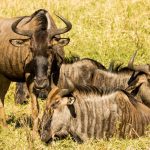
The migration is not a single event. It is a year-round cycle of herds moving between Tanzania and Kenya. In the Mara, the dramatic river crossings happen from late July to October, with exact weeks varying by rain, and August and September generally the most reliable months.
If your priority is calm viewing over a dramatic crossing, visit in June or November, when the herds are often still present but vehicle pressure is lower. The best strategy is a private conservancy like Mara North or Naboisho, which border the national reserve but cap vehicle numbers. French-speaking guides do work there, though you may need to request one.
Le Kenya est-il sûr pour les voyageurs francophones qui ne parlent pas anglais?
Yes. Kenya welcomes millions of tourists each year, and the safari circuit is well developed and safe. You do not need to speak English to navigate it, because your guide handles rangers, hotel staff, and police checkpoints. Some basic English still helps in Nairobi restaurants and at the airport.
Malaria risk covers most of Kenya’s safari areas, though standard travel health guidance often excludes Nairobi itself because of its altitude. Talk to your doctor or a travel clinic six to eight weeks before departure about which parks on your route need antimalarial pills. The biggest risk is not crime but long drives, so plan a rest stop every two to three hours. Roads to the Mara remain rough in sections, so a skilled 4×4 driver is essential. For packing advice, see our Kenya safari packing list.
Comment choisir une agence ou un opérateur fiable?
You have two paths. The first is a French-speaking operator from France or Belgium who subcontracts to a local Kenyan company. This gives you a contract in French with recourse under European consumer law. Expect a higher price, though, and a possible language gap on the ground.
The second is booking directly with a Kenyan operator that employs French-speaking guides, often cheaper. Check for a genuine French-language website, not a machine-translated one, and read reviews on TripAdvisor and SafariBookings. Ask for a video introduction from the guide, and avoid operators who refuse a written guarantee.
The table below summarizes the key planning decisions.
| Planning question | Recommended choice for French speakers | Why |
|---|---|---|
| Season for first safari | February or June | Dry roads, fewer crowds, moderate prices |
| Park to prioritize | Masai Mara | Best wildlife density and French guides |
| Guide setup | Private French-speaking guide | Consistent language, flexible schedule |
| Booking route | Direct Kenyan operator with French website | Often lower cost, clear written guarantee |
| Trip length | 7 to 10 days | Balanced travel time and game viewing |
| Mara park fee | About 100 USD/day Jan to June, about 200 USD/day Jul to Dec | Set by Narok County Government, migration season pricing |
| Amboseli, Tsavo, Nakuru fees | About 90, 80, and 90 USD/day | Set by Kenya Wildlife Service |
Faut-il absolument un guide francophone pour un safari au Kenya?
The short answer is no, if you speak English reasonably well. Many guides speak English as a second language and are happy to slow down. But if your English is limited, a French-speaking guide is not a luxury. It is the difference between a lecture and a conversation, and you will learn more because the guide understands your questions.
The exception is luxury camping safaris in private conservancies, where some operators design trips around a single language. For everyone else, a guide who speaks French well is worth the extra cost.
Where Can You Compare and Book a Kenya Safari?
TouringInsights is an editorial guide. To compare safari operators and browse packages, visit FindMySafari, which lists French-speaking operators and lets you filter by language. Valley Safaris offers detailed Kenya itineraries, and Trunktrails Safaris is another option for custom trips with French guides. Compare at least three operators before you pay a deposit. Ask each for written confirmation that your guide speaks French for the full itinerary.
What Other Safari Planning Resources Can Help?
- Masai Mara Great Migration guide from Trunktrails Safaris
- Interactive Maasai Mara map from Valley Safaris
- Compare Kenya safari packages on FindMySafari
- Kenya wildlife tours from Trunktrails Safaris
More safari planning resources
- Masai Mara Great Migration guide from Trunktrails Safaris
- Interactive Maasai Mara map from Valley Safaris
- Compare Kenya safari packages on FindMySafari
- Kenya wildlife tours from Trunktrails Safaris
Related guides: Kenya Safari for French Travelers: A Planning Guide.